Boostaro Official Website › Blog › Boostaro ingredients
What Are the Ingredients in Boostaro, and Are Amounts Printed?
Boostaro names seven ingredients: L-citrulline, maritime pine bark extract, vitamin C, L-lysine, magnesium, vitamin K2 and nattokinase. The amount of each is not published, on the bottle front or on the sales page. The Supplement Facts panel on your own bottle is the only place to check.
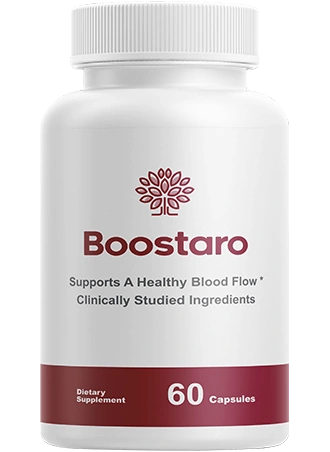
Curious about the bottle itself?
The checkout page shows the pack options and the guarantee terms, and your bottle’s own label will show what we cannot.
See today’s price and guaranteeEarnings disclosure: this website earns when an order goes through its checkout. It is a USA Authorized Boostaro Retailer, not the manufacturer.
- Seven named ingredients; every amount is not published.
- L-citrulline has the most relevant human research on the list.
- L-lysine has no circulatory trial record at any dose.
- Vitamin K2, nattokinase and pine bark all matter if you take a blood thinner.
- No trial of the finished Boostaro capsule exists.
- Your own bottle’s Supplement Facts panel governs over any website.
What are the seven ingredients in Boostaro?
Here is the full named list, in the order the sales page gives it. Next to each name we put the dose that research used. That column is not the dose in a Boostaro capsule. It is only the yardstick you would need if the label gave you an amount to hold against it.
| Ingredient | Amount on this label | Dose used in the research |
|---|---|---|
| L-Citrulline | Not published | 1.5 g a day for 1 month |
| Maritime Pine Bark extract | Not published | Standardised extract, in a combination trial |
| Vitamin C | Not published | 90 mg a day is the adult male requirement |
| L-Lysine | Not published | No circulatory trial record at any dose |
| Magnesium | Not published | 368 mg a day median, 3 months |
| Vitamin K2 | Not published | 180 mcg a day for 3 years |
| Nattokinase | Not published | 2,000 fibrinolytic units a day for 8 weeks |
Read the table twice. The middle column is the same all the way down, and the right-hand column shows how different the doses can be. Some are grams, some are milligrams, some are micrograms and one is a unit of enzyme activity. Whether one capsule holds each of them at study strength is not something the label tells you, so it is fair to ask what each one is doing there.
What does L-citrulline do, and what did the trial find?
L-citrulline is an amino acid. The body turns it into L-arginine, and L-arginine is used to make nitric oxide, a molecule that relaxes the muscle in blood vessel walls. That chain is the reason citrulline sits first on the list and the reason the bottle talks about blood flow.
The most relevant human study is a small one. Cormio and colleagues, in Urology in 2011, gave 1.5 g a day for one month to 24 men with mild erectile dysfunction. The hardness score improved in 12 of the 24 men, against 2 of 24 on placebo. The authors called the effect modest. It was one site and a small group.
Two other papers fill in the picture. A review of blood pressure trials found small, real drops in pressure that grew with dose. Earlier work compared citrulline with arginine and explained why citrulline is the form people put in capsules.
One caution matters here. Citrulline works on the same nitric oxide pathway as nitrates and as the prescription pills for erectile dysfunction. If you take either, ask your prescriber before you start.
Why is maritime pine bark extract on the label?
Maritime pine bark extract comes from the bark of a French pine. It is rich in plant compounds called procyanidins. Supplement makers like it, and it has the loudest reputation on this panel.
The study that gets quoted most is Stanislavov and colleagues, in the International Journal of Impotence Research in 2008. It tested pine bark together with L-arginine in a crossover design and reported better erectile function scores. The supplier funded it, and because it tested a combination, it cannot tell you what pine bark does alone.
The wider evidence is colder. A 2020 Cochrane review looked at 27 trials across 10 conditions and called the evidence insufficient for any chronic disorder. We think readers should see that sentence before they see a marketing line about pine bark.
There is a mild antiplatelet effect in some studies, so mention this ingredient if you take a blood thinner.
What do vitamin C and L-lysine add to Boostaro?
These two are the quiet members of the panel.
Vitamin C is a cofactor in building collagen, which gives structure to vessel walls, and it helps recycle a cofactor that cells need to make nitric oxide. A 2014 meta-analysis found it improved endothelial function in people with existing vascular disease or diabetes, and not in healthy people. A 2019 umbrella review was blunter. The adult male requirement is 90 mg a day according to the NIH, and the upper limit for total intake is 2,000 mg a day. With no amount printed, you cannot add Boostaro’s share to your other vitamins.
L-lysine is an essential amino acid, which means food must supply it. It is the weakest ingredient on the list for the purpose the bottle describes. It has no randomised trial record in circulatory or sexual function. Its supplement reputation comes from cold sores, and a 2015 Cochrane review did not find good evidence there either. It likely sits beside vitamin C because both feed collagen work. That is a mechanism, not a finding.
What are magnesium, vitamin K2 and nattokinase doing in the capsule?
These three bring the strongest cautions.
- Magnesium. A mineral used in more than 300 enzyme reactions, including ones that relax smooth muscle. A review of 34 double-blind trials found a median 368 mg a day for 3 months lowered systolic pressure by about 2 mmHg. The NIH upper limit for supplemental magnesium is 350 mg a day. It can reduce absorption of some antibiotics and bisphosphonates, so space those doses two hours apart.
- Vitamin K2. The form of vitamin K that helps keep calcium out of artery walls. The trial behind it used 180 mcg a day for 3 years in 244 postmenopausal women. Vitamin K2 directly opposes warfarin. Do not take it with warfarin or a similar drug unless the clinician who manages your INR agrees.
- Nattokinase. An enzyme from natto, a fermented soybean food. One trial gave 2,000 fibrinolytic units a day to 86 adults for 8 weeks and saw about a 5.5 mmHg fall in systolic pressure. It adds to anticoagulant and antiplatelet effects and is usually stopped before surgery.
None of those facts is a reason to avoid the product by itself. They are a reason to read the label, make a medicine list and talk to a pharmacist before the first capsule.
Why does “not published” matter on an ingredient list?
An unpublished amount is not proof of a poor product. It might be a generous formula. It might not. The problem is that you cannot tell, and four ordinary questions then go unanswered:
- Does any ingredient reach the dose used in research? For citrulline that dose is 1.5 g a day, which would take up most of a seven-ingredient capsule.
- Are you near an upper limit? Supplemental magnesium has one at 350 mg and vitamin C at 2,000 mg.
- How much vitamin K2 is your prescriber working around, if you take a vitamin K antagonist?
- How active is the nattokinase? Enzymes are dosed in fibrinolytic units, and no unit figure is published either.
We rate this as the weakest point of the product, and good research on a single ingredient does not repair it.
How do you read the real Boostaro label when it arrives?
Your bottle is the authority. The front shows the name, a floral mark, the claim text, the capsule count and the words Dietary Supplement. Turn it over for the Supplement Facts panel.
- Look for an amount beside each of the seven names. If your bottle shows amounts, you know more than this website does. Email [email protected] with a photo and the page will be corrected.
- Look for the daily serving. Follow it exactly and do not take extra.
- Check the form of the magnesium and the K2. Neither form is stated in our material.
- Look at the base of the bottle for the lot code and best-before date. The lot on file is BAR-26/AM-7740.
Frequently asked questions
What are the ingredients in Boostaro?
Seven are named: L-citrulline, maritime pine bark extract, vitamin C, L-lysine, magnesium, vitamin K2 and nattokinase. The amount of each one is not published.
Does the Boostaro label show how much of each ingredient is inside?
Not on the bottle front and not on the sales page. The Supplement Facts panel on your own bottle governs, so read it when the parcel arrives.
Which Boostaro ingredient has the best evidence?
L-citrulline. It has the one small trial that studied the thing the bottle is about, and research explaining why it is used instead of L-arginine.
Which Boostaro ingredient has the weakest evidence?
L-lysine. It has no randomised trial record in circulatory or sexual function at any dose.
Do any Boostaro ingredients interact with medicine?
Yes. Vitamin K2 opposes warfarin, nattokinase and pine bark affect clotting, L-citrulline acts on the nitric oxide pathway, and magnesium can reduce absorption of some antibiotics.
Has Boostaro itself been through a clinical trial?
No. The research cited concerns single ingredients, usually at amounts this label does not publish.
Plain facts. Boostaro is a dietary supplement. It is not FDA approved, and no dietary supplement is. These statements have not been evaluated by the Food and Drug Administration, and this product is not intended to diagnose, treat, cure or prevent any disease. Nothing on this page is medical advice. Talk to a doctor before use if you take medicine or have a health condition.
Our view
An ingredient list is only half of a label. The other half is the amount. Boostaro gives you the first half and keeps the second one back, and that is the main thing to weigh.
On the research side, the panel is not empty of ideas. L-citrulline has a real, small trial, and magnesium and nattokinase have blood pressure data. But the doses in those studies are not the doses on this label, and we do not pretend otherwise.
If you decide to try it, bring your medicine list to a pharmacist first and keep the bottle for reference. The guarantee gives you time to decide with the facts in hand.
Compare the label with the research yourself
If you want to check the Supplement Facts panel against the studies, the 60-day guarantee lets you do that with the bottle in your hand.
See today’s price and guaranteeEarnings disclosure: this website earns when an order goes through its checkout. It is a USA Authorized Boostaro Retailer, not the manufacturer.
Sources for this article
- Cormio L, De Siati M, Lorusso F, Selvaggio O, Mirabella L, Sanguedolce F, Carrieri G. Oral L-citrulline supplementation improves erection hardness in men with mild erectile dysfunction. Urology. 2011;77(1):119-22. https://pubmed.ncbi.nlm.nih.gov/21195829/
- Mirenayat MS, Moradi S, Mohammadi H, Rouhani MH. Effect of L-Citrulline Supplementation on Blood Pressure: a Systematic Review and Meta-Analysis of Clinical Trials. Curr Hypertens Rep. 2018;20(11):98. https://pubmed.ncbi.nlm.nih.gov/30284051/
- Schwedhelm E, Maas R, Freese R, Jung D, Lukacs Z, Jambrecina A, Spickler W, Schulze F, Boger RH. Pharmacokinetic and pharmacodynamic properties of oral L-citrulline and L-arginine: impact on nitric oxide metabolism. Br J Clin Pharmacol. 2008;65(1):51-9. https://pubmed.ncbi.nlm.nih.gov/17662090/
- Stanislavov R, Nikolova V, Rohdewald P. Improvement of erectile function with Prelox: a randomized, double-blind, placebo-controlled, crossover trial. Int J Impot Res. 2008;20(2):173-80. https://pubmed.ncbi.nlm.nih.gov/17703218/
- Robertson NU, Schoonees A, Brand A, Visser J. Pine bark (Pinus spp.) extract for treating chronic disorders. Cochrane Database Syst Rev. 2020;9(9):CD008294. https://pubmed.ncbi.nlm.nih.gov/32990945/
- Ashor AW, Lara J, Mathers JC, Siervo M. Effect of vitamin C on endothelial function in health and disease: a systematic review and meta-analysis of randomised controlled trials. Atherosclerosis. 2014;235(1):9-20. https://pubmed.ncbi.nlm.nih.gov/24792921/
- Ashor AW, Brown R, Keenan PD, Willis ND, Siervo M, Mathers JC. Limited evidence for a beneficial effect of vitamin C supplementation on biomarkers of cardiovascular diseases: an umbrella review of systematic reviews and meta-analyses. Nutr Res. 2019;61:1-12. https://pubmed.ncbi.nlm.nih.gov/30683434/
- Chi CC, Wang SH, Delamere FM, Wojnarowska F, Peters MC, Kanjirath PP. Interventions for prevention of herpes simplex labialis (cold sores on the lips). Cochrane Database Syst Rev. 2015;(8):CD010095. https://pubmed.ncbi.nlm.nih.gov/26252373/
- Zhang X, Li Y, Del Gobbo LC, Rosanoff A, Wang J, Zhang W, Song Y. Effects of Magnesium Supplementation on Blood Pressure: A Meta-Analysis of Randomized Double-Blind Placebo-Controlled Trials. Hypertension. 2016;68(2):324-33. https://pubmed.ncbi.nlm.nih.gov/27402922/
- Knapen MH, Braam LA, Drummen NE, Bekers O, Hoeks AP, Vermeer C. Menaquinone-7 supplementation improves arterial stiffness in healthy postmenopausal women. A double-blind randomised clinical trial. Thromb Haemost. 2015;113(5):1135-44. https://pubmed.ncbi.nlm.nih.gov/25694037/
- Kim JY, Gum SN, Paik JK, Lim HH, Kim KC, Ogasawara K, Inoue K, Park S, Jang Y, Lee JH. Effects of nattokinase on blood pressure: a randomized, controlled trial. Hypertens Res. 2008;31(8):1583-8. https://pubmed.ncbi.nlm.nih.gov/18971533/
- Chen H, McGowan EM, Ren N, Lal S, Nassif N, Shad-Kaneez F, Qu X, Lin Y. Nattokinase: A Promising Alternative in Prevention and Treatment of Cardiovascular Diseases. Biomark Insights. 2018;13:1177271918785130. https://pubmed.ncbi.nlm.nih.gov/30013308/
- National Institutes of Health, Office of Dietary Supplements. Magnesium: Fact Sheet for Consumers. https://ods.od.nih.gov/factsheets/Magnesium-Consumer/
- National Institutes of Health, Office of Dietary Supplements. Vitamin C: Fact Sheet for Consumers. https://ods.od.nih.gov/factsheets/VitaminC-Consumer/
- National Institutes of Health, Office of Dietary Supplements. Vitamin K: Fact Sheet for Consumers. https://ods.od.nih.gov/factsheets/VitaminK-Consumer/