Boostaro Official Website › Blood Flow Supplement Guide
The Blood Flow Supplement Guide
Blood flow supplements are built around one pathway: nitric oxide, which relaxes the muscle in vessel walls. Most of the category is an arginine precursor plus supporting nutrients. The trials behind the better ingredients are small, run for weeks to months, and use doses most capsules do not publish. This guide names what has evidence and what does not.
Written by the Boostarovitality editorial desk. It is a reference page rather than a sales page, and it would still be useful to somebody who buys nothing.
What a blood flow supplement contains
Open twenty products in this category and the panels rhyme. There is almost always an amino acid that raises plasma arginine, usually citrulline. There is frequently a polyphenol extract: pine bark, grape seed or beetroot. Then a group of supporting nutrients, most often vitamin C, magnesium and a vitamin K.
The similarity is not laziness. It reflects a genuinely narrow mechanism: there are not many nutrients with published human work on endothelial function, so everyone draws from the same short list. What separates products is not the names on the panel but the amounts beside them, which is why an unpublished panel is so hard to evaluate.
The rest of this guide takes the mechanism, then the ingredients, then the doses, then the things that do more than any of them.
What nitric oxide actually does
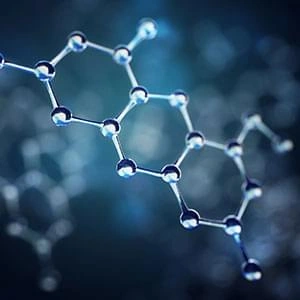
The inner lining of a blood vessel, the endothelium, produces nitric oxide from the amino acid arginine. Nitric oxide diffuses into the smooth muscle wrapped around the vessel and tells it to relax, which widens the vessel and increases flow through it. This happens continuously, and it is regulated by blood flow itself, by exercise and by the health of the lining.
Two practical consequences follow. First, anything that damages the endothelium (smoking, high blood pressure, diabetes, chronic inflammation) reduces nitric oxide availability. Second, supplying more substrate only helps if substrate is what was limiting, which is not established in healthy people.
That second point is the honest heart of this whole category, and almost no product page states it.
What the evidence says, name by name
| Ingredient | What it is for | Strength of human evidence |
|---|---|---|
| L-Citrulline | Raises plasma arginine, feeds nitric oxide synthesis | The strongest on the list. Pharmacokinetics established, and one small trial in men with mild difficulty. |
| L-Arginine | The direct substrate | Poorly absorbed by mouth. Largely superseded by citrulline for this purpose. |
| Maritime pine bark | Polyphenols, studied for endothelial support | Weak. A 2020 Cochrane review across 27 trials found the evidence insufficient. |
| Vitamin C | Cofactor recycling, antioxidant support | Improves endothelial function in people with existing disease, not in healthy people. |
| Magnesium | Vascular smooth muscle function | Good evidence for a small blood pressure effect at 368 mg a day over months. |
| Vitamin K2 | Calcium handling in vessel walls | One three-year trial in postmenopausal women at 180 mcg a day. |
| Nattokinase | Fibrinolysis | One eight-week trial at 2,000 fibrinolytic units, plus mechanism reviews. |
| L-Lysine | Collagen cross-linking substrate | No trial record for circulatory purposes. Its reputation comes from cold sore research, which was also unconvincing. |
Read the third column as a ladder rather than a verdict. Nothing here is a drug, and nothing here has been tested as part of a seven-ingredient capsule.
Why the amount matters more than the name
Every trial in the table above used a specific amount, and in most cases that amount is larger than a multi-ingredient capsule can carry.
- Citrulline: 1.5 g a day in the erectile function trial; 3 to 6 g in much of the exercise literature. A capsule holding seven ingredients cannot contain 1.5 g of one of them unless it is a very large capsule.
- Magnesium: 368 mg median in the blood pressure meta-analysis, against a supplemental upper limit of 350 mg.
- Vitamin K2: 180 mcg a day for three years.
- Nattokinase: 2,000 fibrinolytic units, which is an activity unit rather than a weight.
So the first question to ask of any product in this category is not which ingredients are on the panel. It is how many milligrams of each, and how that compares to the number in the study the marketing is leaning on. A panel that does not publish amounts cannot answer it.
The levers that beat any capsule in this category
Blood pressure control
The single largest modifiable factor for vascular function, and the one with a measurement anyone can take.
Sleep
Short sleep raises blood pressure and impairs endothelial function within days. No supplement on this list competes with a fixed sleep schedule.
Smoking and alcohol
Both damage the endothelium directly. Stopping smoking does more for vascular function than every ingredient in this guide combined.
Exercise
Flow-mediated dilation improves with regular aerobic exercise. The mechanism is the same one the supplements are aiming at, and the evidence is far stronger.
Weight and waist
Central adiposity and insulin resistance both reduce nitric oxide availability.
Getting checked
Erectile difficulty frequently precedes a cardiovascular diagnosis by two to five years. An appointment is worth more than a bottle.
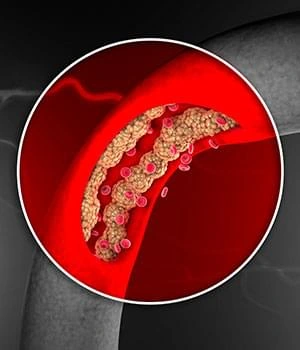
What the artwork in this category is doing
Five questions for any product in this category
Are the amounts published?
If not, no comparison to any trial is possible, and the rest of the questions cannot be answered either.
Do the amounts match the research?
Look up one ingredient, find the trial dose, and compare. It takes five minutes and it decides most purchases.
Is there a refund route with an address?
A window with no returns address is a marketing line rather than a policy.
The fourth question is about interactions: does the page list them at all? Pine bark, nattokinase and vitamin K all matter to anyone on a blood thinner, and a page that sells all three without mentioning warfarin is not being careful with you.
The fifth is the simplest. Does the page say anything that costs it money? If everything on a product page flatters the product, you have learned nothing from reading it.
Boostaro against this guide
It would be strange to publish this guide on a website that sells one of these products without saying how that product scores against it.
- Citrulline first on the panel: consistent with the strongest evidence in the category.
- Amounts not published: fails the first and most important question above.
- Pine bark included: an ingredient whose reputation outruns its evidence.
- Interactions listed in full on its own page, including warfarin.
- A refund route with an address and a phone desk seven days a week.
Two clear passes, one clear fail, and one ingredient we are lukewarm about. The checklist guide scores it against ten points rather than five.
Sources for this guide
- Schwedhelm E, Maas R, Freese R, Jung D, Lukacs Z, Jambrecina A, Spickler W, Schulze F, Boger RH. Pharmacokinetic and pharmacodynamic properties of oral L-citrulline and L-arginine: impact on nitric oxide metabolism. Br J Clin Pharmacol. 2008;65(1):51-9. https://pubmed.ncbi.nlm.nih.gov/17662090/
- Cormio L, De Siati M, Lorusso F, Selvaggio O, Mirabella L, Sanguedolce F, Carrieri G. Oral L-citrulline supplementation improves erection hardness in men with mild erectile dysfunction. Urology. 2011;77(1):119-22. https://pubmed.ncbi.nlm.nih.gov/21195829/
- Mirenayat MS, Moradi S, Mohammadi H, Rouhani MH. Effect of L-Citrulline Supplementation on Blood Pressure: a Systematic Review and Meta-Analysis of Clinical Trials. Curr Hypertens Rep. 2018;20(11):98. https://pubmed.ncbi.nlm.nih.gov/30284051/
- Stanislavov R, Nikolova V, Rohdewald P. Improvement of erectile function with Prelox: a randomized, double-blind, placebo-controlled, crossover trial. Int J Impot Res. 2008;20(2):173-80. https://pubmed.ncbi.nlm.nih.gov/17703218/
- Robertson NU, Schoonees A, Brand A, Visser J. Pine bark (Pinus spp.) extract for treating chronic disorders. Cochrane Database Syst Rev. 2020;9(9):CD008294. https://pubmed.ncbi.nlm.nih.gov/32990945/
- Ashor AW, Lara J, Mathers JC, Siervo M. Effect of vitamin C on endothelial function in health and disease: a systematic review and meta-analysis of randomised controlled trials. Atherosclerosis. 2014;235(1):9-20. https://pubmed.ncbi.nlm.nih.gov/24792921/
- Ashor AW, Brown R, Keenan PD, Willis ND, Siervo M, Mathers JC. Limited evidence for a beneficial effect of vitamin C supplementation on biomarkers of cardiovascular diseases: an umbrella review of systematic reviews and meta-analyses. Nutr Res. 2019;61:1-12. https://pubmed.ncbi.nlm.nih.gov/30683434/
- Zhang X, Li Y, Del Gobbo LC, Rosanoff A, Wang J, Zhang W, Song Y. Effects of Magnesium Supplementation on Blood Pressure: A Meta-Analysis of Randomized Double-Blind Placebo-Controlled Trials. Hypertension. 2016;68(2):324-33. https://pubmed.ncbi.nlm.nih.gov/27402922/
- Knapen MH, Braam LA, Drummen NE, Bekers O, Hoeks AP, Vermeer C. Menaquinone-7 supplementation improves arterial stiffness in healthy postmenopausal women. A double-blind randomised clinical trial. Thromb Haemost. 2015;113(5):1135-44. https://pubmed.ncbi.nlm.nih.gov/25694037/
- Kim JY, Gum SN, Paik JK, Lim HH, Kim KC, Ogasawara K, Inoue K, Park S, Jang Y, Lee JH. Effects of nattokinase on blood pressure: a randomized, controlled trial. Hypertens Res. 2008;31(8):1583-8. https://pubmed.ncbi.nlm.nih.gov/18971533/
- Chen H, McGowan EM, Ren N, Lal S, Nassif N, Shad-Kaneez F, Qu X, Lin Y. Nattokinase: A Promising Alternative in Prevention and Treatment of Cardiovascular Diseases. Biomark Insights. 2018;13:1177271918785130. https://pubmed.ncbi.nlm.nih.gov/30013308/
- Chi CC, Wang SH, Delamere FM, Wojnarowska F, Peters MC, Kanjirath PP. Interventions for prevention of herpes simplex labialis (cold sores on the lips). Cochrane Database Syst Rev. 2015;(8):CD010095. https://pubmed.ncbi.nlm.nih.gov/26252373/
- Gandaglia G, Briganti A, Jackson G, Kloner RA, Montorsi F, Montorsi P, Vlachopoulos C. A systematic review of the association between erectile dysfunction and cardiovascular disease. Eur Urol. 2014;65(5):968-78. https://pubmed.ncbi.nlm.nih.gov/24011423/
- National Institute of Diabetes and Digestive and Kidney Diseases. Erectile Dysfunction (ED). https://www.niddk.nih.gov/health-information/urologic-diseases/erectile-dysfunction
- National Center for Complementary and Integrative Health. Dietary and Herbal Supplements. https://www.nccih.nih.gov/health/dietary-and-herbal-supplements
- National Institutes of Health, Office of Dietary Supplements. Dietary Supplements: What You Need to Know. https://ods.od.nih.gov/factsheets/WYNTK-Consumer/
Every page, every journal post, the bottle facts and the ingredients go through review by Dr. Rachel Rubin, MD before they ship. We write these pages from the Boostaro bottle and the distributor’s own paperwork, cite published research for every named ingredient, and print “not published” wherever a figure is not disclosed rather than estimating it. Where the manufacturer’s marketing art claims more than the bottle supports, we print both and say which one we follow. Corrections are made on the page itself and the review date moves forward. Write to [email protected]. Last reviewed September 2026 by Dr. Rachel Rubin, MD.