Boostaro Official Website › Blog › Pine bark evidence
Pine Bark Extract: What The Cochrane Review Found
- One supplier-funded combination trial reported improved erectile function scores.
- A 2020 Cochrane review across 27 trials found the evidence insufficient for any chronic disorder.
- Insufficient is not the same as ineffective, and the difference matters both ways.
- This label names the ingredient without a standardisation or an amount.
- Pine bark is one of three ingredients here that matter to anyone on a blood thinner.
What maritime pine bark extract is
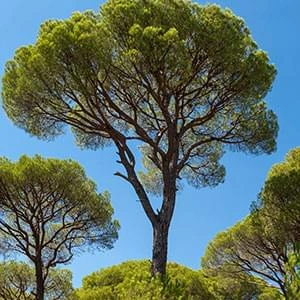
Maritime pine bark extract is made from the bark of Pinus pinaster, a tree that grows along the Atlantic coast of south-western France and across the western Mediterranean. The bark is rich in procyanidins, a family of polyphenols also found in grape seed and cocoa.
The best-known standardised version is sold under a trademark, and much of the published research uses that specific extract rather than pine bark generally. That distinction matters when a label names the ingredient without naming a standardisation, which is the case here.
The trial the marketing quotes
The study that appears behind almost every men’s formula containing pine bark is Stanislavov and colleagues, Int J Impot Res, 2008: a randomised, double-blind, placebo-controlled crossover trial of a combination product containing pine bark extract and L-arginine, which reported improved erectile function scores.
Three things about it should be read alongside the result.
- It tested a combination. Pine bark plus arginine. It cannot tell you what the bark does on its own, and arginine has its own literature.
- It was funded by the ingredient supplier. That does not make a result wrong. It does change how much weight one positive trial deserves.
- It is one study. A single positive trial is a reason to look further, not a conclusion.
Looking further is exactly what the next section does, and the picture changes.
What the Cochrane review found
The Cochrane Collaboration produces systematic reviews to a fixed methodology, including an assessment of bias in every trial included. Its 2020 review of pine bark extract is the most thorough look at this ingredient that exists.
The reviewers included 27 randomised trials across 10 chronic conditions, involving almost 2,000 participants. Their conclusion was that the evidence was insufficient to support the use of pine bark extract for treating any chronic disorder, citing small sample sizes, short durations, and inconsistent reporting of outcomes.
| Source | What it covered | Conclusion |
|---|---|---|
| Stanislavov 2008 | One combination product, pine bark plus arginine | Improved erectile function scores |
| Cochrane 2020 | 27 randomised trials, 10 conditions, about 2,000 participants | Evidence insufficient for any chronic disorder |
| The gap between them | One supplier-funded combination trial against a full systematic review | The review is the stronger evidence and it is the colder answer |
This table is the whole article in three rows. Where a single trial and a systematic review disagree, the review is what a careful reader follows.
Insufficient is not the same as ineffective
It would be easy to over-read the Cochrane conclusion, and it is worth being precise, because precision cuts both ways here.
Insufficient evidence means the trials that exist are too small, too short or too inconsistent to support a conclusion. It does not mean the ingredient was tested properly and found to do nothing. Those are different findings and they get confused constantly.
What it does mean for a buyer is that nobody, including the manufacturer, can currently tell you what this ingredient will do for you. Sometimes better trials arrive and change that. Frequently they do not.
Our position, printed on the page that sells it: pine bark is the ingredient on this panel whose reputation most outruns its evidence. That is a reason to weigh it lightly rather than a reason to avoid the product, and a buyer is entitled to make that judgement for himself.
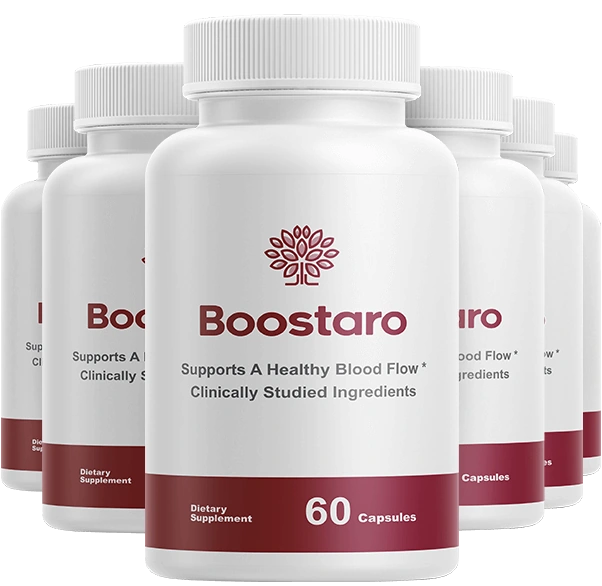
Boostaro names pine bark among seven actives
We print the Cochrane conclusion on the page that sells it, because a panel is worth what its weakest ingredient is honestly described as.
60 capsules a bottle · 60-day money-back window
Order Boostaro On The Official WebsiteWhy standardisation is the question nobody asks
Botanical extracts are not commodities. The active fraction in pine bark is the procyanidin content, and two extracts with the same name can differ several-fold in it depending on the source bark, the solvent and the process.
That is why the published research uses standardised material and states the standardisation. A label that names pine bark extract without a standardisation is naming a category rather than an ingredient.
- What a good label prints: the species, the plant part, the extract ratio and the standardised marker with its percentage.
- What this label prints: the name.
- What that rules out: any comparison to the published trials, which is the same conclusion the article on the missing amounts reaches from the other direction.
The trademark, and why the name on a label matters
Most of the published pine bark research uses a specific trademarked extract produced to a fixed specification. That is why the studies are reproducible enough to review at all, and it is also why the marketing around the ingredient is unusually well organised: a trademarked ingredient has an owner with a research budget.
A label may name the trademark, in which case you know which material was used, or it may name the plant, in which case you do not. Both are legal. Only one lets you connect a product to a body of research.
- Named trademark plus a standardisation: the strongest form. You know the material and the marker content.
- Named trademark alone: reasonable. The specification is published by the ingredient supplier.
- Species and plant part only: weaker, and the commonest.
- Pine bark extract, with no further detail: the least informative version, and the one this label carries.
None of that means the material is poor. It means you cannot tell, which is the recurring theme of every article on this blog about this particular panel.
The other polyphenols you will meet on these shelves
Pine bark is not alone, and the alternatives are worth recognising because the marketing language around them is nearly identical.
- Grape seed extract. Closely related procyanidins, a similar evidence picture, and frequently cheaper.
- Cocoa flavanols. Better evidence for endothelial function than most of this group, and the effective amounts are large.
- Beetroot and nitrate sources. A different mechanism entirely, supplying nitrate rather than arginine, and with a reasonable exercise literature behind it.
- Quercetin, resveratrol and the rest. Popular, heavily marketed, and generally thinner in human evidence than the enthusiasm suggests.
The point is not that one of these is the right answer. It is that a panel naming any of them is making the same kind of bet, and the same five questions below apply to all of them.
Safety, and the interaction that matters
Pine bark extract has shown a mild antiplatelet effect in some studies. If you take warfarin, apixaban, clopidogrel or daily aspirin therapy, this is one of three ingredients on this panel that your prescriber should know about. The other two are vitamin K2 and nattokinase.
In the trials that exist, side effects were generally mild and uncommon: digestive upset, headache, dizziness. That is the usual profile for a polyphenol extract, and the Cochrane review found no serious safety signal, which is a meaningfully different finding from its efficacy conclusion.
The safety page lists the full interaction table for this panel, and it is the page to read before the pricing page if you take anything prescribed.

How to weigh an ingredient like this one
The method generalises, which is the reason to read this article even if you never buy anything containing pine bark.
- Find the systematic review first, not the trial. A single trial is the marketing department's evidence; a review is the field's.
- Check who paid. Supplier funding is not disqualifying and it is worth knowing.
- Check whether the trial tested the ingredient or a combination. A combination result cannot be assigned to one component.
- Check the standardisation, then check whether the product in front of you states one.
- Ask what the page selling it says about the weak evidence. If the answer is nothing, you have learned something about the page.
Five questions, ten minutes, and they work on any botanical on any panel. NCCIH publishes a plain guide to reading botanical evidence that is worth bookmarking.
The bottom line on pine bark
It is a plausible ingredient with a real mechanism, one supplier-funded combination trial pointing in a favourable direction, and a full Cochrane review concluding that the evidence across 27 trials is insufficient. On this particular label it appears without a standardisation and without an amount.
If you are buying this product, buy it for the citrulline, where the evidence is thinner than a drug's but real, and treat the pine bark as a bonus rather than a reason. If you are buying something else, apply the five questions above to whatever is on its panel.
And if a page tells you pine bark is clinically proven, you now know which review to check it against.
Sources for this article
- Robertson NU, Schoonees A, Brand A, Visser J. Pine bark (Pinus spp.) extract for treating chronic disorders. Cochrane Database Syst Rev. 2020;9(9):CD008294. https://pubmed.ncbi.nlm.nih.gov/32990945/
- Stanislavov R, Nikolova V, Rohdewald P. Improvement of erectile function with Prelox: a randomized, double-blind, placebo-controlled, crossover trial. Int J Impot Res. 2008;20(2):173-80. https://pubmed.ncbi.nlm.nih.gov/17703218/
- Cormio L, De Siati M, Lorusso F, Selvaggio O, Mirabella L, Sanguedolce F, Carrieri G. Oral L-citrulline supplementation improves erection hardness in men with mild erectile dysfunction. Urology. 2011;77(1):119-22. https://pubmed.ncbi.nlm.nih.gov/21195829/
- National Center for Complementary and Integrative Health. Dietary and Herbal Supplements. https://www.nccih.nih.gov/health/dietary-and-herbal-supplements
- National Institutes of Health, Office of Dietary Supplements. Dietary Supplements: What You Need to Know. https://ods.od.nih.gov/factsheets/WYNTK-Consumer/
- Federal Trade Commission. Health Products Compliance Guidance. 2022. https://www.ftc.gov/business-guidance/resources/health-products-compliance-guidance

Every page, every journal post, the bottle facts and the ingredients go through review by Dr. Rachel Rubin, MD before they ship. We write these pages from the Boostaro bottle and the distributor’s own paperwork, cite published research for every named ingredient, and print “not published” wherever a figure is not disclosed rather than estimating it. Where the manufacturer’s marketing art claims more than the bottle supports, we print both and say which one we follow. Corrections are made on the page itself and the review date moves forward. Write to [email protected]. Last reviewed September 2026 by Dr. Rachel Rubin, MD.